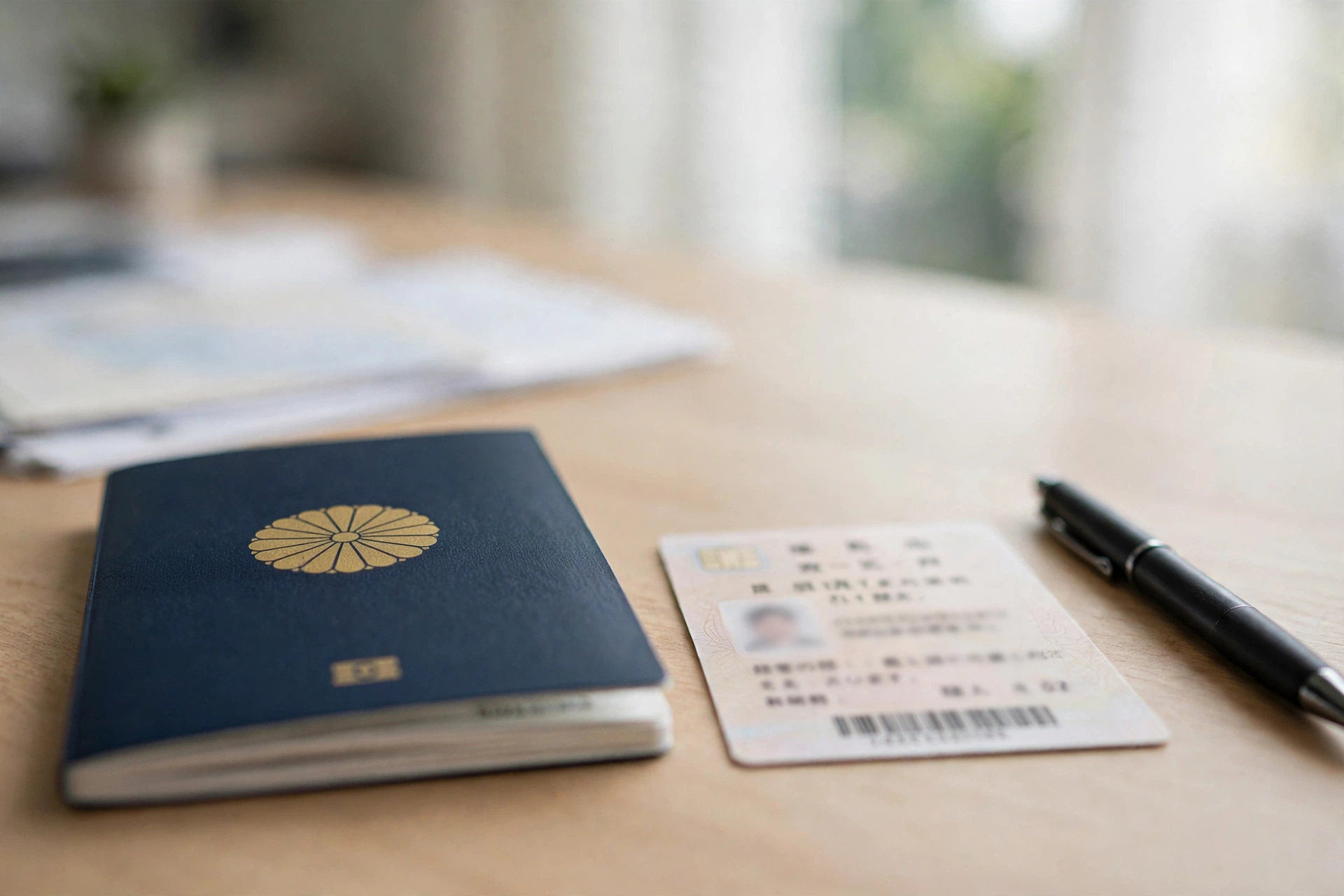
“It is not the case that once you marry, your spouse automatically becomes able to live in Japan” — many people assume so, but in fact it is different. Even after the marriage notification is accepted and you become a married couple in law, a foreign spouse needs permission for a status of residence through screening by the immigration authorities in order to live in Japan. The screening asks “will you really live together as a married couple?” and “can you live stably in Japan?”, and depending on the circumstances, permission may be refused.
Also, the status of residence a spouse can obtain differs depending on whether the partner is a Japanese national, a permanent resident, or a foreign national residing on a work visa. When a child is born, status-of-residence procedures also await.
In this article, we explain in turn the “status of residence” side of life after an international marriage: from the screening points for a spouse visa (Spouse or Child of Japanese National), to the statuses that vary with your partner’s position, the exceptions for permanent residence and naturalisation, and a child’s status of residence. The “procedures” side — marriage notification documents, notification to the partner’s country, and so on — is explained in detail in the companion article “International Marriage Procedures”.
■ What is examined in screening for a spouse visa (Spouse or Child of Japanese National)
Once the marriage is established, the next step is screening by the immigration authorities. The period of stay for “Spouse or Child of Japanese National” is one of 5 years, 3 years, 1 year, or 6 months, and at first it is commonly 1 year. The type of application differs: to bring your spouse from overseas, an application for a Certificate of Eligibility; if your spouse is already in Japan, an application for permission to change status of residence; to extend the period, an application for extension of period of stay.
Required documents differ somewhat by application type, but for the Certificate of Eligibility and change of status, roughly the following are required:
- Application form and a photograph
- The Japanese spouse’s family register certificate (koseki tohon) showing the marriage (if it does not show the marriage, also a certificate of acceptance of the marriage notification)
- A marriage certificate issued in the applicant’s country of nationality
- Documents proving the cost of stay in Japan (residence tax taxation certificate, tax payment certificate, etc.)
- The Japanese spouse’s letter of guarantee
- A copy of the certificate of residence (juminhyo) of all members of the Japanese spouse’s household
- Questionnaire
- Documents showing the couple’s relationship (2–3 snapshot photographs, records of SNS messages or calls, etc.)
Two points are especially emphasised in screening:
1. The genuineness of the marriage
The core of the screening is whether the marriage is genuine — not a sham marriage — and whether the couple has the substance of a married life. The contents of the “questionnaire,” which describes the course from meeting to marriage, the length of the courtship, whether you have been introduced to each other’s families, the means of everyday communication, and so on are looked at comprehensively. Circumstances such as an extremely short courtship, a large age gap, or no common language with unclear means of communication do not in themselves lead straight to refusal, but they increase the material on which you will be asked for explanations. It is important to write the course of events concretely and honestly.
2. Whether you can live stably in Japan (the livelihood requirement)
Whether the couple has income or assets to live on in Japan is also examined. The basics are to show recent income and tax payment status with a taxation certificate and tax payment certificate; if you have only just started a job and the certificates are insufficient, supplement them with copies of bank books or a certificate of expected employment, and the like.
For the general approach to status of residence and visa applications, please also see our office’s residence status service page.
■ It depends on your partner’s position — the status of residence your spouse can obtain
The “Spouse or Child of Japanese National” discussed so far applies when your partner is Japanese. If your partner is a foreign national, the status of residence your spouse can obtain varies with the partner’s position.
| Partner’s position | Spouse’s status of residence | Points |
| Japanese national | Spouse or Child of Japanese National | No work restrictions |
| Permanent Resident / Special Permanent Resident | Spouse or Child of Permanent Resident | No work restrictions. Period of stay: 5 years, 3 years, 1 year, or 6 months |
| Long-Term Resident | Long-Term Resident | No category in the public notice; judged on individual circumstances. No work restrictions |
| Foreign national residing on a work visa, etc. | Dependent | Premised on being financially supported. Work is in principle not possible; with permission to engage in activity other than that permitted under the status of residence, up to 28 hours per week |
Even if you marry someone residing on a work visa, you do not necessarily have to switch to “Dependent.” If you already hold your own work visa (such as Engineer/Specialist in Humanities/International Services), you also have the option of continuing to live on your own status of residence. Because “Dependent” is premised on a support relationship, it is more susceptible to the effects of your partner’s leaving or changing jobs, and there can also be differences in how your years of residence are counted for a future permanent residence application. Which is more advantageous depends on how the couple works, so it is important to compare before switching.
The next step — the exceptions for permanent residence and naturalisation
If marriage leads you to live in Japan for a long time, there are spouse exceptions for permanent residence permission and naturalisation.
- The spouse exception for permanent residence permission: For spouses of Japanese nationals, Permanent Residents, and Special Permanent Residents, the standard requirement of “residing in Japan continuously for 10 years or more” is shortened. Under the current guideline, the condition is “marital life with substance continuing for 3 years or more, and continued residence in Japan for 1 year or more,” and applications filed by March 31, 2027 will be judged under this standard. However, under the new guideline revised on October 1, 2026, for applications filed on or after April 1, 2027, the requirement will be raised to “marital life with substance continuing for 5 years or more, and continued residence in Japan for 3 years or more” (for the biological children, etc., of Japanese nationals and Permanent Residents as well, the required period of residence rises from 1 year or more to 3 years or more). Also, the fee for permanent residence permission was revised to 200,000 yen for applications filed on or after October 1, 2026. Those aiming for permanent residence should note that the conditions and the fee change depending on when you apply.
- The marriage exception for naturalisation: For spouses of Japanese nationals, Article 7 of the Nationality Act relaxes the conditions for naturalisation. A person who has had an address or residence in Japan continuously for 3 years or more and currently has an address in Japan, or a person for whom 3 years have passed since the date of marriage and who has had an address in Japan continuously for 1 year or more, may be permitted to naturalise even without meeting the usual residence requirement (an address continuously for 5 years or more) and the capacity requirement.
For residence status after divorce (such as the notification within 14 days of the divorce and changing to “Long-Term Resident”), see the companion article “International Divorce Procedures and Residence Status After Divorce”.
■ When a child is born — the child’s status of residence (application for permission to acquire status of residence)
The birth notification and nationality of a child are explained in the companion article “International Marriage Procedures”. Here we look at the immigration procedures required when both parents are foreign nationals and the child does not acquire Japanese nationality.
The “60 days” and “30 days” deadlines from birth
A child of foreign nationals born in Japan may lawfully stay in Japan for 60 days from the date of birth without holding a status of residence. However, if the child will continue to live in Japan beyond 60 days, an “application for permission to acquire status of residence” must be filed within 30 days of the date of birth (Article 22-2 of the Immigration Control Act). Missing this deadline can lead to overstaying, so it is important to confirm the arrangements before the birth.
Required documents, and how the child’s passport is handled
For the application, prepare the application form for permission to acquire status of residence, documents certifying the birth (such as a certificate of acceptance of the birth notification), copies of the parents’ residence cards and passports, and documents showing support and the family relationship, and the like. The child’s passport must be presented, but if it has not yet been issued, you apply after explaining those circumstances, and present it once it has been issued. Note that for a child who is under 1 year of age on the day the residence card is issued, no photograph needs to be attached to the application form (treatment in effect from June 14, 2026).
The status of residence granted to the child is decided according to the parents’ status of residence
Typical patterns are as follows:
- One of the parents is a Permanent Resident → “Spouse or Child of Permanent Resident” (as a child of a Permanent Resident born in Japan who continues to reside in Japan thereafter)
- The parents reside on work visas, etc. → “Dependent”
- One of the parents resides as “Spouse or Child of Japanese National” or “Long-Term Resident” and the child does not hold Japanese nationality → generally permitted as “Long-Term Resident”
File the birth notification in the home country and obtain the passport in parallel
Please also proceed in parallel with notifying the birth to the embassy or consulate of the country of the child’s nationality and obtaining the child’s passport. If issuance of the passport is delayed, it also affects the status-of-residence procedures. Things get hectic right after a birth, but prepare by counting back from the birth for at least these three deadlines: “the birth notification within 14 days,” “the application to acquire status within 30 days of the birth,” and “the child may stay without a status of residence only up to 60 days.”
If you have any difficulty with the procedures for your child’s status of residence, please consult us via the contact page.
■ Frequently asked questions
Q1. Our courtship was short and there is a large age gap. Will the spouse visa not be granted?
A. It will not be refused for that reason alone. However, the immigration authorities examine the genuineness of the marriage carefully. It is important to write the course of your relationship concretely in the questionnaire and to assemble documents showing the couple’s relationship, such as photographs and message records. If you are uneasy about your circumstances, we recommend consulting a specialist before applying.
Q2. Once we marry, can my spouse work freely in Japan?
A. The “Spouse or Child of Japanese National” status of residence has no work restrictions, and the holder can work in any type of job (no permission to engage in activity other than that permitted under the status of residence is needed either). However, this is while the residence as a spouse continues; after a divorce, a change of status of residence becomes necessary.
Q3. What should we do about the status of residence of a foreign-national child born in Japan?
A. A child of foreign nationals born in Japan may lawfully stay in Japan for 60 days from the date of birth without holding a status of residence, but if the child will continue to live in Japan beyond 60 days, an “application for permission to acquire status of residence” is required within 30 days of the date of birth. The status of residence granted to the child is decided according to the parents’ status of residence. Missing the deadline can lead to overstaying, so please prepare before the birth.
Q4. Does marriage make permanent residence permission easier to obtain?
A. There is an exception for spouses of Japanese nationals, Permanent Residents, and Special Permanent Residents, shortening the standard “continued residence of 10 years or more” to “marital life with substance continuing for 3 years or more, and continued residence in Japan for 1 year or more.” However, for applications filed on or after April 1, 2027, this will be raised to “marital life of 5 years or more and continued residence of 3 years or more.” Also, the fee for permanent residence permission is 200,000 yen for applications filed on or after October 1, 2026. Please note that the conditions and the fee change depending on when you apply.
Information verified: November 24, 2026 (verified against official information from the Immigration Services Agency of Japan and the Ministry of Justice)
■ Supervised by
Itsuki Kiryu (Gyoseishoshi)
Representative of Hokuto Legal Services (Gyoseishoshi). Based in Osaka, his practice centres on residence status and visa applications (Specified Skilled Worker, permanent residence, naturalisation), and also covers vehicle registration and seal fitting (Teishu member of the Osaka Gyoseishoshi Association), inheritance and will drafting, and a wide range of licences and permits. He is also involved in running a registered support organisation, supporting companies that employ foreign nationals. He explains procedures and required documents clearly, in line with each client’s individual circumstances.